Worthington’s twelve elementary and preschool facilities were built between 1958 and 1989. Thus, our schools are between 37 and 68 years old. While the buildings are safe and well-maintained, they lack the flexible spaces and amenities that best support education today and in the future. Each day, our school staff maximizes the facilities they have for student learning, but we know that what we have today is not what we want for our community in the future. This process will engage the community in identifying shared priorities for the future, while recognizing that community aspirations and available funding may not always align. We believe as a school district that we should articulate the future we desire for our students and staff and then respect the community’s ultimate authority on what we move forward with.
What came from Phase 1 and 2?
Phase 1 focused on our middle schools, including building and renovating facilities and moving sixth grade from elementary schools to middle schools to accommodate the growing student population. Technology updates and new school buses were also incorporated in this phase to ensure safe and well-equipped learning.
Phase 2 focused on our secondary schools, including the construction of the new Thomas Worthington High School and the renovation of Worthington Kilbourne High School. Renovations and replacements to Thomas Worthington High School created a larger cafeteria, modernized science labs, and flexible learning spaces, while renovations to Worthington Kilbourne High School provided larger classrooms, increased natural light, a new roof and more efficient heating and cooling systems.
These phases were designed to address immediate facility needs while creating a strong foundation for future planning.
Why plan now?
Worthington Schools made significant improvements to the district’s middle and high school facilities through Phase 1 and Phase 2 of the Master Facilities Plan. Now, our elementary school and preschool facilities are aging and require evaluation. Starting this process now allows the community to be deeply involved in decision-making on the future of our schools.
Timeline
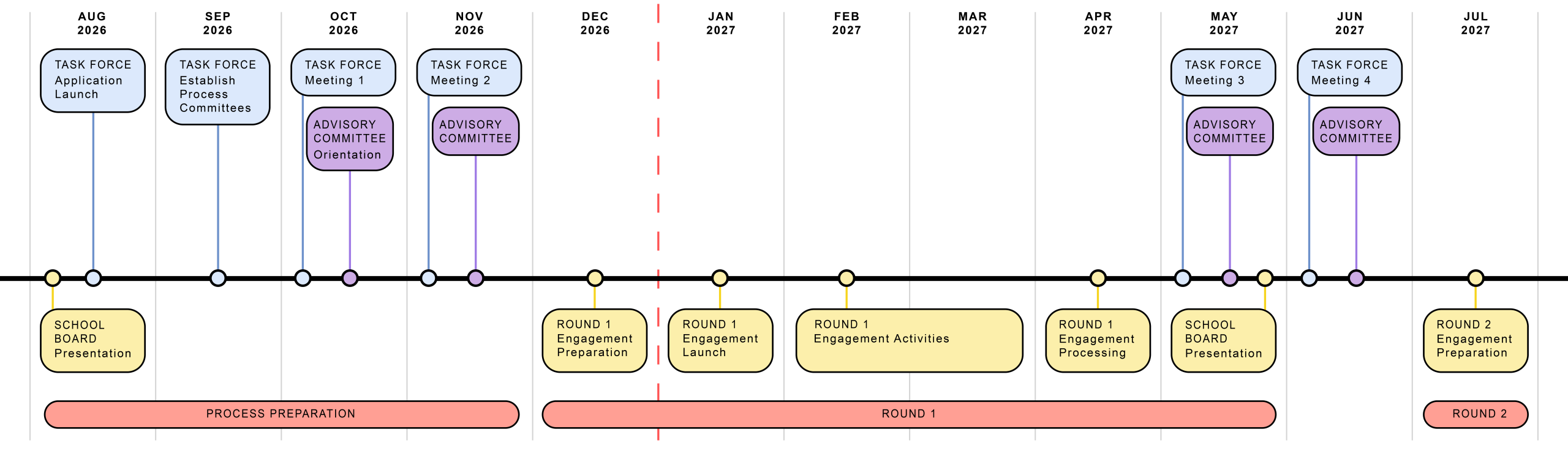
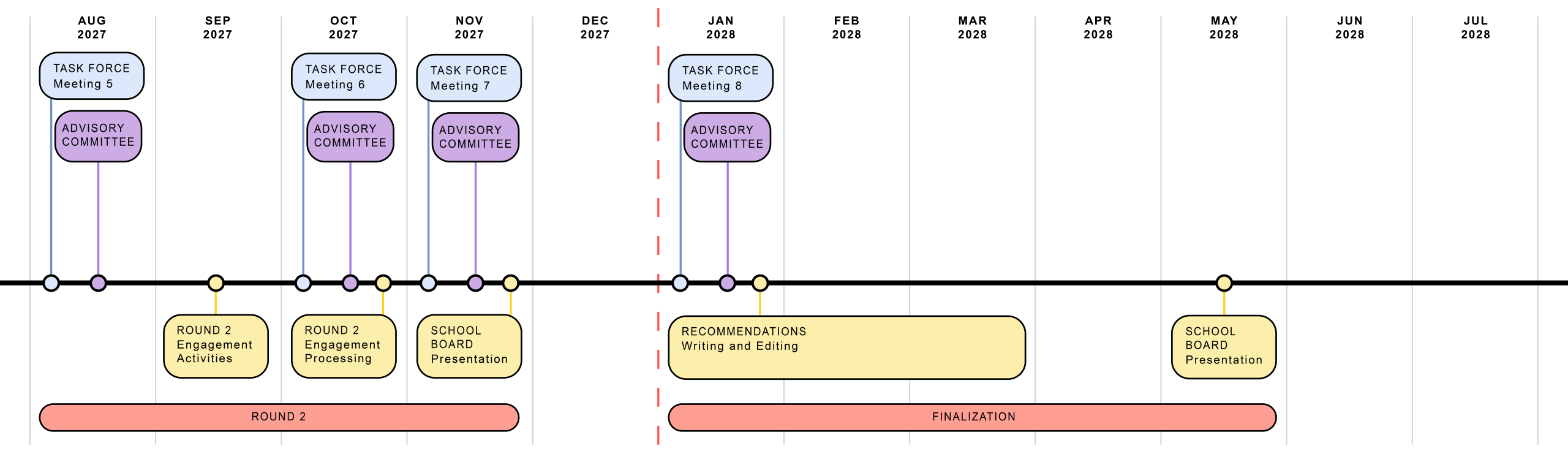
Phase 3 will take place over the 2026-27 and 2027-28 school years as outlined in the timeline below. The public engagement process concludes in Spring 2028 with the Task Force’s delivery of recommendations to the Board of Education.
Roles and Responsibilities
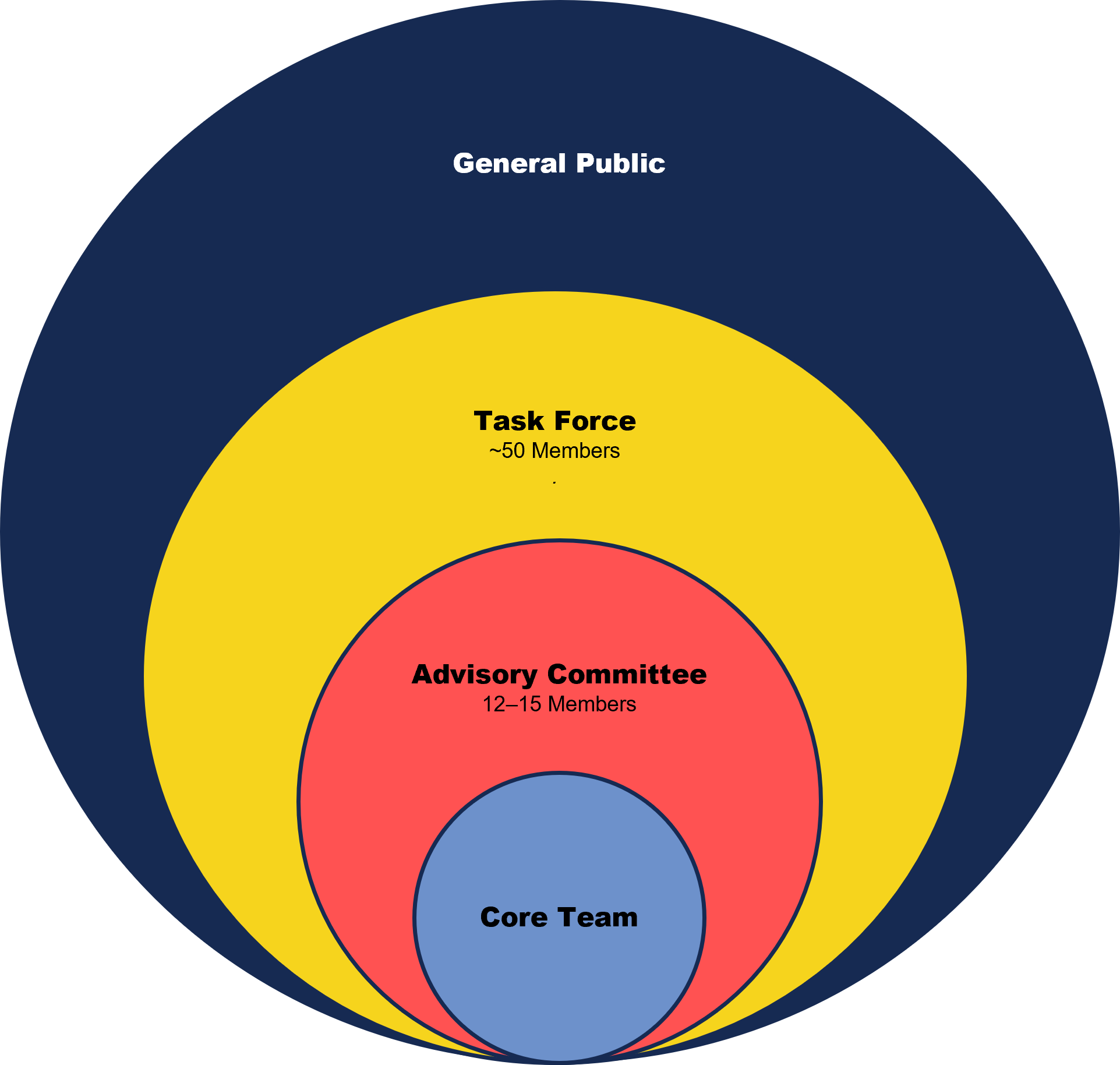
General Public: The public will participate in two rounds of engagement that will guide the future of the school district’s elementary and preschool facilities. The first round will capture ideas and values and the second round will solidify the community’s priorities.
Task Force: The Task Force refines public input into strategies and outcomes and will shape the final report to the school board.
Advisory Committee: The Advisory Committee processes feedback from the Task Force and provides direction to the engagement process and report development.
Core Team: The Core Team manages the logistics, schedule and scope of the process.
Task Force
The Phase 3 Task Force will include representatives from a variety of community organizations, businesses, volunteer organizations, churches, parents, teachers, and members of the general public. In addition, a number of Task Force positions will be selected by Planning NEXT through an application process to ensure broad community representation and diverse perspectives.
Task Force members will serve as a sounding board throughout the process, providing feedback, sharing insights, and helping guide broader community engagement efforts. Members will participate in regular meetings over the course of the next two school years and will help communicate information about the process with their respective networks.
In addition to the Task Force, the district will provide multiple opportunities for residents, families, staff, students, and community members to learn about the process, ask questions, provide feedback, and participate in discussions. Community engagement opportunities will be designed to allow participants to engage with information at a time and in a format that works best for them.
Frequently Asked Questions (FAQs)
1. What is the Phase 3 Master Facilities Plan?
Phase 3 is the next step in Worthington Schools’ long-term planning process and is focused on engaging the community in conversations about the future of our elementary school and preschool facilities. The goal of this process is to listen, gather input, explore options, and develop a thoughtful plan that supports students, families, and staff for generations to come. Phase 3 is an opportunity to come together and create a plan for our elementary and preschool facilities that is rooted in the values of the Worthington Schools community.
2. Why plan now?
All twelve of Worthington Schools’ elementary and preschool buildings were built prior to 1990. The buildings are safe and well-maintained, but they lack the flexible spaces and amenities that best support education today. In Phase 1 and Phase 2 of the Master Facilities Plan, Worthington Schools made significant improvements to the district’s middle and high school facilities.. Now, our elementary school and preschool facilities deserve the same level of attention and care. Starting this process now allows the community to be deeply involved in decision-making on the future of our schools.
3. What did Phase 1 and Phase 2 accomplish?
Phase 1 renovated all four middle schools and shifted the district to a 6-8 grade configuration. It was funded through a 2018 bond issue and included a district-wide technology update.
Phase 2 renovated two high schools and improved a range of sports and recreation facilities across high, middle, and elementary schools. It was funded through a 2022 bond issue and is scheduled for completion at the end of 2026.
4. What is the goal of Phase 3?
Phase 3 is an engagement process designed to collectively build a vision and set of priorities for Worthington Schools’ elementaries and preschool. Phase 3 will conclude with the delivery of a set of recommendations from the Task Force to the Board of Education in Spring 2028. Only after this is complete will the Board consider funding options, such as a bond issue, and begin planning for the construction, renovation, or modification of school facilities.
5. Is Phase 3 for me?
Yes! Whether you are a parent, student, teacher, staff member, or resident of the district, anyone who lives in or sends their students to Worthington School District are encouraged to participate in the process. Strong schools contribute to strong communities, so everyone benefits when a school district thrives.
6. Who is involved?
Worthington Schools’ leadership initiated Phase 3 in August 2026. The planning process is facilitated by Planning NEXT, a consulting team, and is led by a Task Force and Advisory Committee comprised of key organizations and members of the community.
The Task Force acts as a bridge between public input and the engagement process and will deliver a set of recommendations to the Board of Education at the end of the process. The Advisory Committee is a subset of the Task Force and district leadership that will provide direction to the consulting team throughout Phase 3.
7. How are the Task Force and Advisory Committee established?
The Task Force will be selected in two parts. First, an open application will be publicized encouraging any resident of the school district to apply. 12 residents will be selected to join the Task Force based on demographic and geographic data to ensure the group is representative of the community. Second, a nomination form will be sent to key organizations, such as PTAs and community groups, that are allowed to nominate a representative to the Task Force. After the Task Force is complete, 5 members will be nominated to serve on the Advisory Committee with district leadership to assist in advising the consulting team throughout the process.
8. How can I get involved?
Phase 3 includes two rounds of public engagement. Both rounds will have in-person and online opportunities to share your thoughts and ideas for the future of Worthington Schools’ elementary and preschool facilities. The in-person and online activities will be the same, and everyone is encouraged to choose the right engagement opportunity for them. Round 1 will take place in Spring 2027 and Round 2 will take place in Fall 2027. Stay tuned to the website for more details about the engagement opportunities or sign up to receive updates.
9. What are the possible outcomes?
District leadership wants to hear from the community before making decisions regarding the future of elementary and preschool facilities. This means that minor and major building renovation, replacement, and consolidation are all options for the public to consider during this process. Residents will be asked to provide feedback over the next two years on their values, priorities, and preferences for future facilities before the Board of Education makes any decisions. After a final report is complete, the Board will consider next steps for funding and timeline for any building construction.
10. What information will be used to evaluate the district’s options?
In addition to the Task Force’s recommendations to the Board of Education, the district will use building assessments, costs, enrollment, usage, and other factors to evaluate its elementary and preschool facilities. Building assessments include consideration of education standards for instruction, safety, and wellness that are recommended for incorporation into the facilities. This information will be communicated to the public during the planning process to ensure that residents are informed about the condition and capacity of the schools.
11. Will Phase 3 require a ballot issue?
Final decisions by the Board of Education on Phase 3 will occur after the Task Force’s recommendations are delivered to the board. Any vote to pursue a ballot issue for funding will follow Ohio law and include communication with the community about options, costs, and timelines. No decisions about funding have been made at this stage.
12. How long will Phase 3 take?
Phase 3 is a public engagement process that will conclude in Spring 2028 with the Task Force’s delivery of recommendations to the Board of Education. Any construction or changes may occur only after a formal decision by the Board of Education and cannot commence until funding is secured. The full facilities planning and construction process is a long-term effort that will not be visible for several years. This effort represents an investment in future generations of Worthington Schools students.
13. How do I stay up-to-date?
Go to togetherweplanphase3.com to get the latest updates and get involved.